

Whistleblower Shake‑Ups: Frances Haugen Sparks Big‑Tech Regulation Talk
What the Social Media Whistleblower – a Former Product Manager – Saw
During a Senate Commerce Committee hearing, Frances Haugen let the House know that the most straightforward way to curb the social media storm is to set up a brand‑new regulatory agency. The agency would be manned by former tech insiders – folks who grew up in the same trenches as Facebook, Pinterest, and other platforms.
Haugen’s Bottom Line: Pressure Is Key
“Right now, the only people fully trained to understand what’s truly happening inside Facebook are those who have lived inside the company for years,” she told legislators. “Until the profit motive changes at Facebook, there’s no reason to expect the company to change on its own.”
She also posed a hypothetical: if I were CEO of Facebook, I’d immediately push a policy that forces the company to share its internal research with Congress and other oversight bodies. Transparency, she argued, would invite public scrutiny and bring real accountability.
Why the Debate on Regulation Has Never Been Heavier
Facebook – the world’s biggest social network – has already faced criticism for its opaque algorithms, data handling practices and the lingering mental‑health impacts on users. The whistleblower’s revelations added a new dimension: the call for a dedicated agency that could rival the FTC in tech regulation.
Experts Join the Call
-
Nathaniel Persily. A Stanford Law School professor who left a previous effort to get Facebook to share more data. He believes legislation is needed to compel platforms to release data to external researchers. “The platforms thrive in secrecy, and when you subject them to outer review, you change their behaviour,” he said.
-
Brian Boland. A former Facebook executive who headed partnership data. He sees transparency as “step one in any kind of regulatory regime.”
-
Tom Wheeler. A former FCC chairman. He imagined a new agency separate from existing departments, with the bandwidth and expertise to set and enforce standards for big tech – particularly regarding privacy.
The Immediate Next Step: A Plan for the FTC
Persily suggested that the FTC takes the lead: “You go to war with the army you have, not the army you may want.” He is pushing for a one‑year deadline for action, but hinted that a future separate cabinet department could eventually emerge.
Bottom Line
Basically, the mess under Facebook’s hood might finally be cleaned up if Congress steps in. It’s less about “fixing” privacy and more about ensuring that companies can’t hide behind data and algorithms without being held accountable.
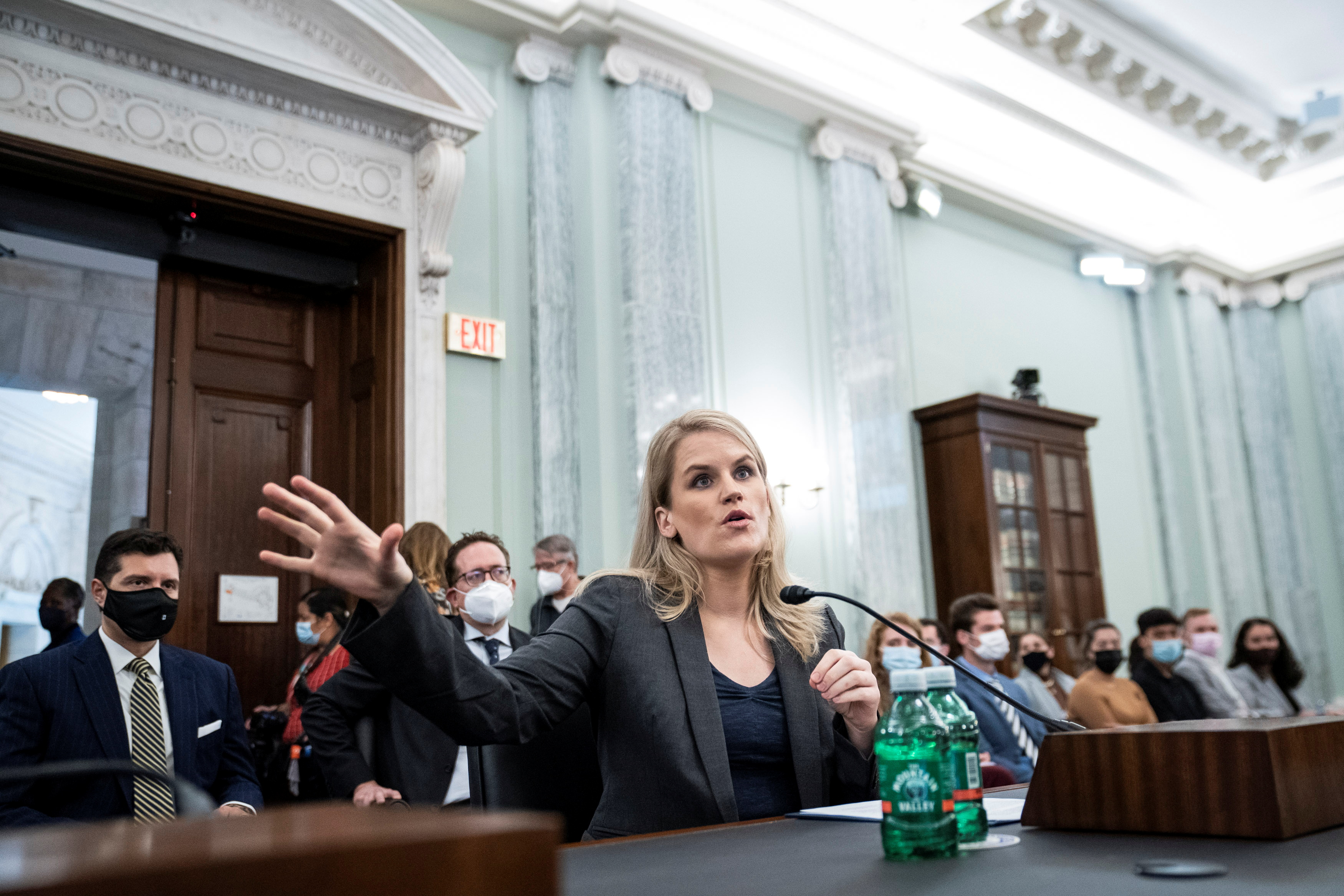
Frances Haugen Goes on the Record: The Senate’s Big‑Bang Blow‑Up
Re‑Imagining Facebook’s Digital Footprint
When Frances Haugen, the former Facebook insider who blew the whistle, stepped onto the Capitol Hill stage on October 5, 2021, she didn’t just talk—she fired a shot across the internet’s dark corridors. The Senate Committee on Commerce, Science, and Transportation had a full‑length hearing titled “Protecting Kids Online: Testimony from a Facebook Whistleblower.” A photo from that day shows her mid‑speaking, a spike of nervous energy in her eyes.
Facebook’s “Red‑Flag” Response
Fast‑forward to the next day, a spokeswoman named Lina Pietsch took the mic and made the claim that Facebook was no longer a passive victim of lawmakers, but an active advocate for change. “We’ve been urging a fresh set of regulations for two and a half years,” she told the press, hinting that the tech giant is now on the pro‑regulatory side of the chat.
Why Some Guiding Stars Are Flickering
- Real Facebook Oversight Board—Led by Kyle Taylor—cautions that a new regulator could devolve into a “revolving door” of ex‑employees sliding into decision‑making roles. “People who used to do the trick now get to say what the trick should be,” he warned.
- Law professor Kate Klonick tweeted a sentiment that has set the internet debate on fire: “An agency that’s tasked with stopping misinformation shouldn’t be running the whole show.” She argued that misinformation ought to be a particular war‑zone, not the entire policy map.
Beyond Regulations
What’s burning on the horizon is not just any old regulation, but a digital regulator—a brand‑new body that would look after the cyber‑wild horses and guard kids against the techno‑bullies. Facebook, which once after the whistleblower’s speech was seen as a lone wolf, now wants to be a participant in the herd.
The Irony of the Spiral
In short, the story continues: Frances says the platform is a bully; Facebook wants to play nice; critics say “nice” comes with a side of potential government influence that could, paradoxically, be as slippery as a cat in a bath of oil. The next chapter will be written in the echoing chambers of Washington and whatever comes next under the digital regulatory windstorm.
Regulation and reform
Haugen Calls for a Personal Touch on the Algorithmic Black Mirror
During Tuesday’s Senate tech hearing, Evan Harrell Haugen didn’t just talk about data privacy—he took a strong swing at the nation’s most infamous internet safety law, Section 230. The veteran whistleblower reminded lawmakers that the algorithm is the king of content, and it means the platforms have a kingly power over our feeds.
Why the 230 Buffs Need a Reality Check
- 100 % control, 0 % accountability. Haugen argued that companies like Facebook and Instagram decide what we see with absolute freedom. If they’re chasing clicks, likes, and viral posts, they’re also chasing our safety.
- “They should not get a free pass for prioritizing growth over public safety,” he pointed out, emphasizing that companies are essentially profiting off our well‑being.
What Facebook’s Current Stance Looks Like
Contrary to Haugen’s retort, Facebook has endorsed a tweaked version of Section 230. Their vision? Companies get protection from liability, but only if they tag in that they’re following “best practices.” That’s all the industry’s current answer to a big problem posed by a big algorithm.
Legislative Pulse‑Points
- In June, a bipartisan Senate duo—Richard Blumenthal and Marsha Blackburn—presented a bill demanding that mega‑platforms let users see non‑algorithmic content. A solid step toward less curated chaos.
- By urging a raise of the age limit from 13 to 16 or even 18, Haugen highlighted youth addiction and the seriousness of self‑regulation among teens.
Under the law as it stands, children up to 12 enjoy more online protection than teens. Already a proposal is floating around that could shift the target age to 15 and bring a host of other tweaks.
Instagram’s Teen Trouble and Facebook’s Take‑Away
After Haugen’s reveal of documents indicating Instagram’s potential harm to teens, Facebook paused its work on a future Instagram version destined for younger users. That’s a way to say “maybe we’re on the right track.”
In short, the “data wars” session underscored the tension: companies pay for growth, but should not be a free ride on our safety, not even if they’re only giving a bridge to their user base. It’s time for legislation to catch up and make algorithms answerable—now, not later.


